

OUR NATURAL WORLD AT GRIMERSTA
HABITAT
The Langabhat catchment rises from the glens of the North Harris hills and flows northwards through the chain of four lochs, streams and rivers, known as the “Grimersta system”, before entering the sea at Grimersta. Loch Langabhat is the headwater of the Grimersta system and, at 11 km. in length and with 45 km. of shoreline, is the largest freshwater loch in the Outer Hebrides.
Parts of the catchment have been designated as Sites of Special Scientific Interest (SSSI), due to the habitats present. Much of the catchment overlaps the Lewis Peatlands Special Area of Conservation (SAC) and Special Protection Area (SPA), the latter designated for breeding divers, waders and raptors.
The Langabhat catchment was designated as a Special Area of Conservation for Atlantic Salmon in 2005, and conservation efforts are guided by the Western Isles Fisheries Trust Langabhat SAC Management Plan.
The catchment has a current conservation grading of “good”, meaning that current exploitation is sustainable. Grimersta therefore operates an “informed and voluntary” policy on catch and release. It is a statutory requirement that prior to 1st April all Salmon must be returned. Thereafter, the release of Salmon and particularly hen fish is strongly encouraged. All Sea trout should be returned. Over the last five years Grimersta rods have averaged 96% catch and release for salmon and grilse.
Golden & White -Tailed Eagles
Both species are established breeding residents. In the summer of 2023, we had the exciting news that a White-Tailed Eagle chick fledged in the wild in England, the first to do so in over 240 years. The parents were a male from Sutherland and a female (G405) who as one of a pair of chicks was relocated from Grimersta.

Otters
The Outer Hebrides remain a stronghold for otters, and although elusive, they are most often encountered by early-morning anglers along the lower river.

Deer
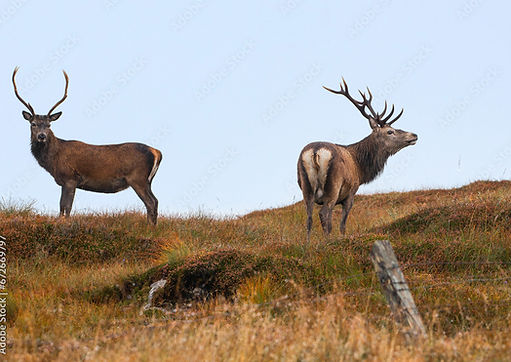
Land use across the estate has changed little over time, with grazing pressure remaining broadly consistent. While sheep numbers have declined, the red deer population has increased, leading to localised areas of overgrazing.
Red-throated and black-throated divers are iconic breeding birds of the Outer Hebrides. Red-throated divers are more widespread, nesting on small lochs and feeding at sea, while the rarer black-throated diver prefers larger inland lochs. The islands’ quiet landscapes and clean waters make them vital for the conservation of both species.
Red & Black
Throated Divers

